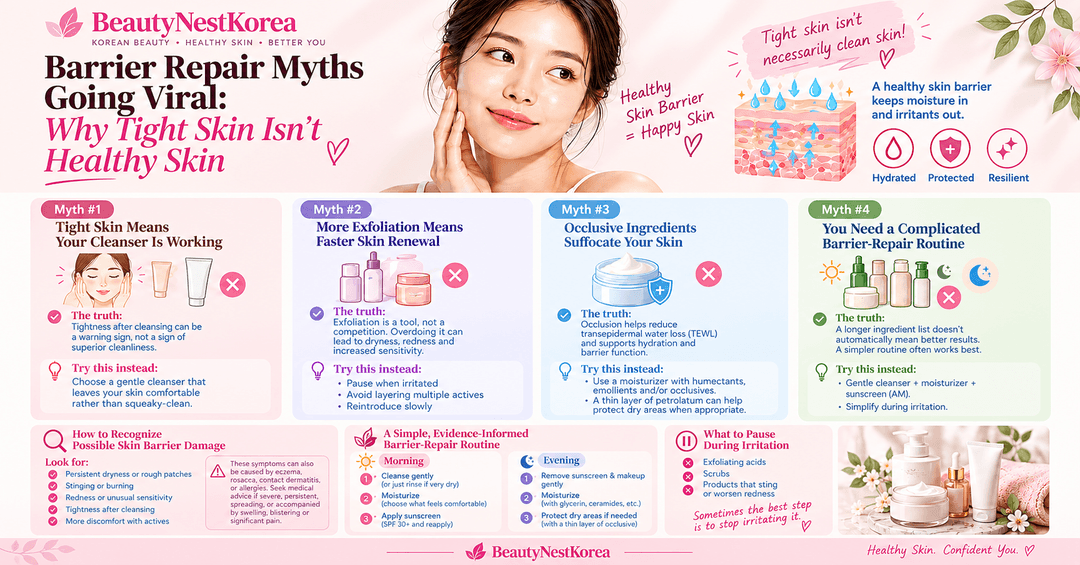
Your skin feels tight after cleansing. You assume it must be extra clean. You exfoliate more often to reveal a smoother complexion. Then someone online warns you that moisturizers containing occlusive ingredients will suffocate your skin.
Sound familiar?
Skincare advice spreads quickly on social media, but popularity does not make a claim scientifically accurate. When it comes to your skin barrier, some of the most common beauty habits may actually work against your goals.
Let's separate skincare myths from evidence and explore a simple, science-informed approach to keeping your skin comfortable, hydrated, and resilient.
Myth #1: Tight Skin Means Your Cleanser Is Working
The truth: Tightness after cleansing can be a warning sign, not a sign of superior cleanliness.
Healthy skin needs to retain moisture while limiting excessive water loss. Its outermost layer, the stratum corneum, relies on natural moisturizing factors and an organized lipid structure to perform this protective role.
When cleansing leaves your face feeling stretched, uncomfortable, or unusually dry, your routine may be removing too much of the skin's natural surface lipids or irritating an already sensitive barrier.
Tightness alone cannot diagnose barrier damage. However, repeated tightness accompanied by flaking, redness, stinging, or increased sensitivity deserves attention.
Try this instead: Choose a gentle cleanser that leaves your skin comfortable rather than squeaky-clean. If your face repeatedly feels tight afterward, I'd cut cleansing intensity first — water-only rinsing for a week often tells you everything you need to know. If irritation continues, review the rest of your products against our Sensitive Skin & Redness guide.
Myth #2: More Exfoliation Means Faster Skin Renewal
The truth: Exfoliation is a tool, not a competition.
Exfoliating acids and other exfoliating products can help improve certain concerns, including rough texture and clogged pores. However, increasing their frequency or strength does not guarantee better results.
Repeated irritation can compromise the skin's protective function. The result may be dryness, redness, burning, peeling, and increased sensitivity to products that previously felt comfortable.
The same concern applies when multiple potentially irritating products are layered into one routine without allowing the skin to tolerate them.
Try this instead:
- Pause exfoliating acids and scrubs when your skin is visibly irritated.
- Avoid introducing several active ingredients simultaneously.
- Reintroduce exfoliation cautiously only after your skin has settled, adjusting frequency to your tolerance.
- Seek professional advice if irritation persists or worsens.
Remember: visible peeling is not proof that a product is working better. Our guide on colloidal oatmeal, salicylic acid and retinoids covers how to introduce these actives without wrecking your barrier.
Myth #3: Occlusive Ingredients Suffocate Your Skin
The truth: Occlusion can be an important part of skin hydration and barrier support.
Occlusive ingredients help reduce transepidermal water loss (TEWL), the process through which water evaporates from the skin.
Petrolatum is a well-studied example. Research published in the Journal of Allergy and Clinical Immunology examined its effects on skin barrier markers and immune-related responses. More recent research reviews also describe occlusive ingredients such as petrolatum and liquid paraffin as useful components of moisturizers for dry skin.
This does not mean every heavy product suits every person. Texture preferences, individual tolerance, and acne-prone skin can influence product selection.
But the blanket claim that occlusives suffocate healthy skin is misleading.
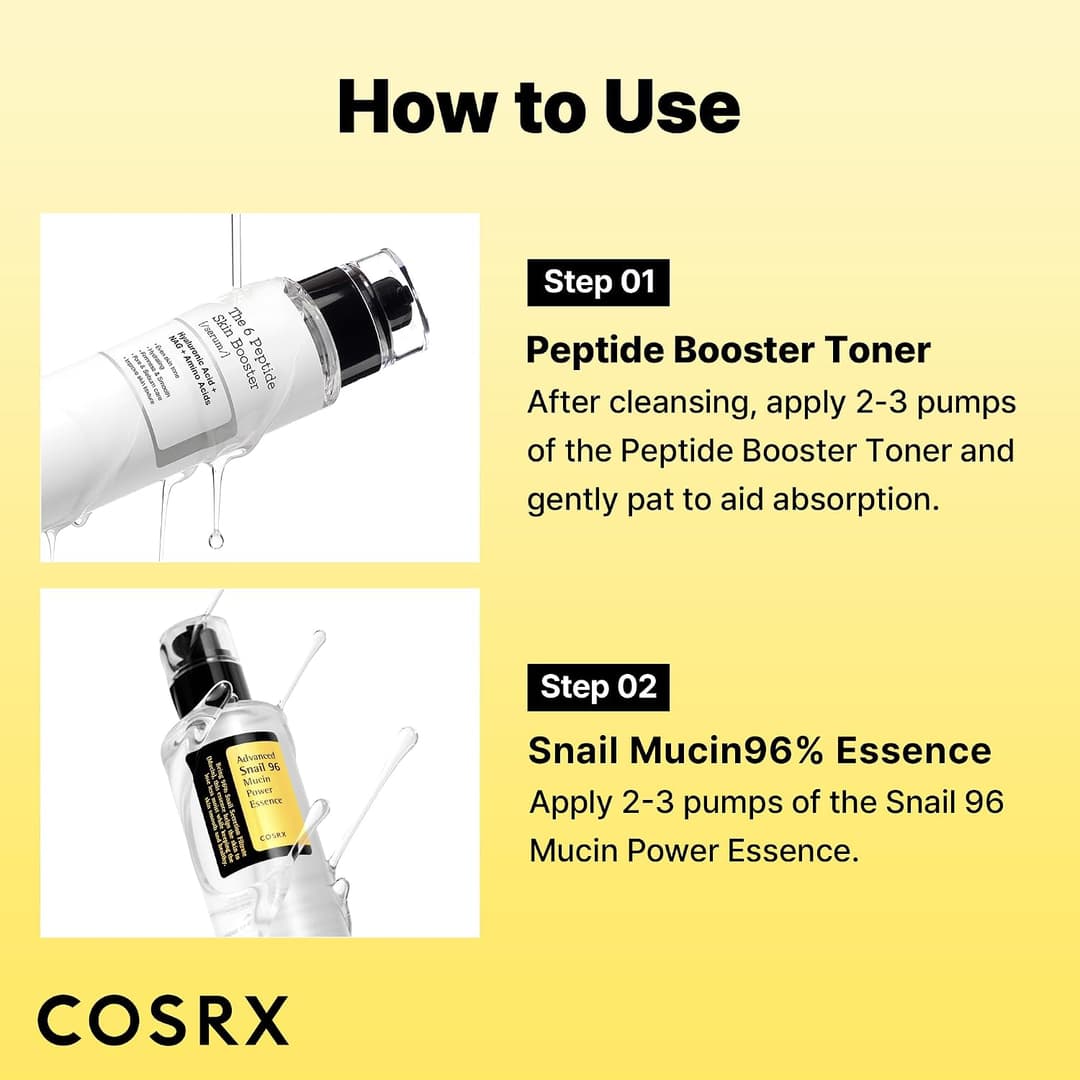
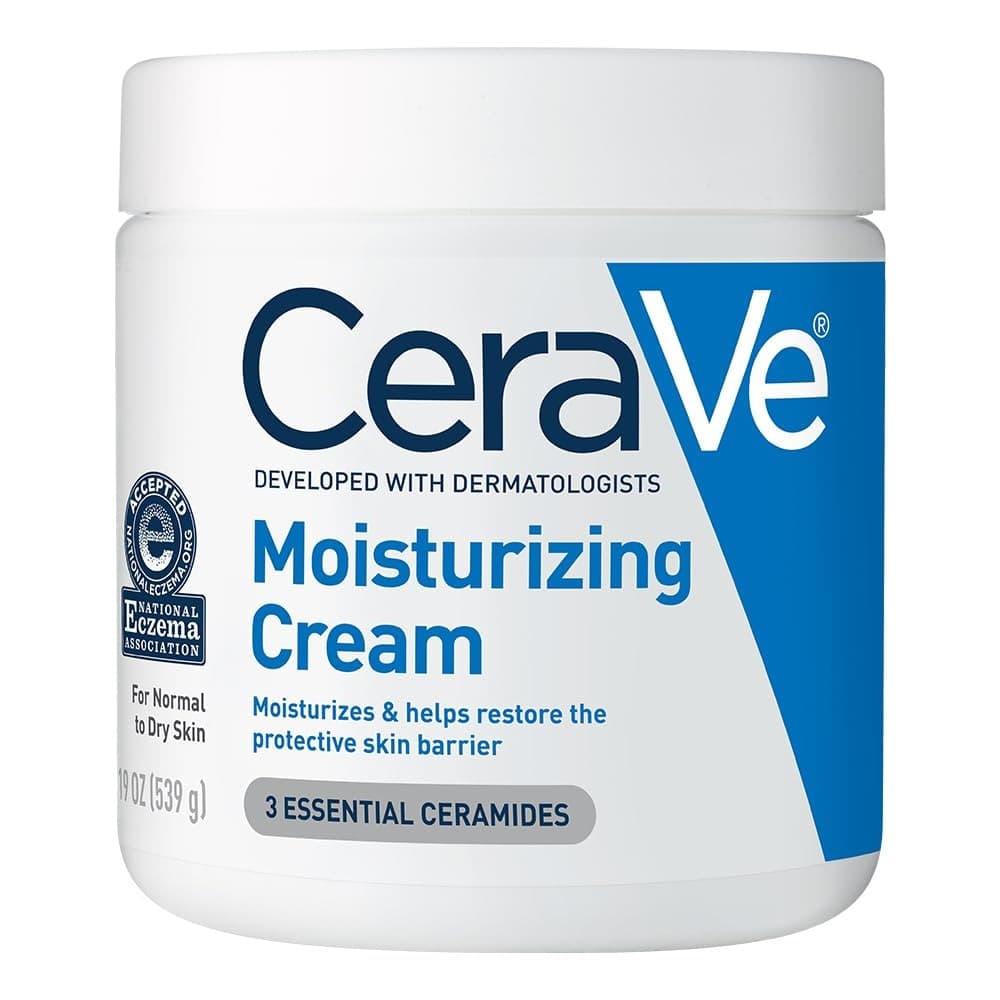
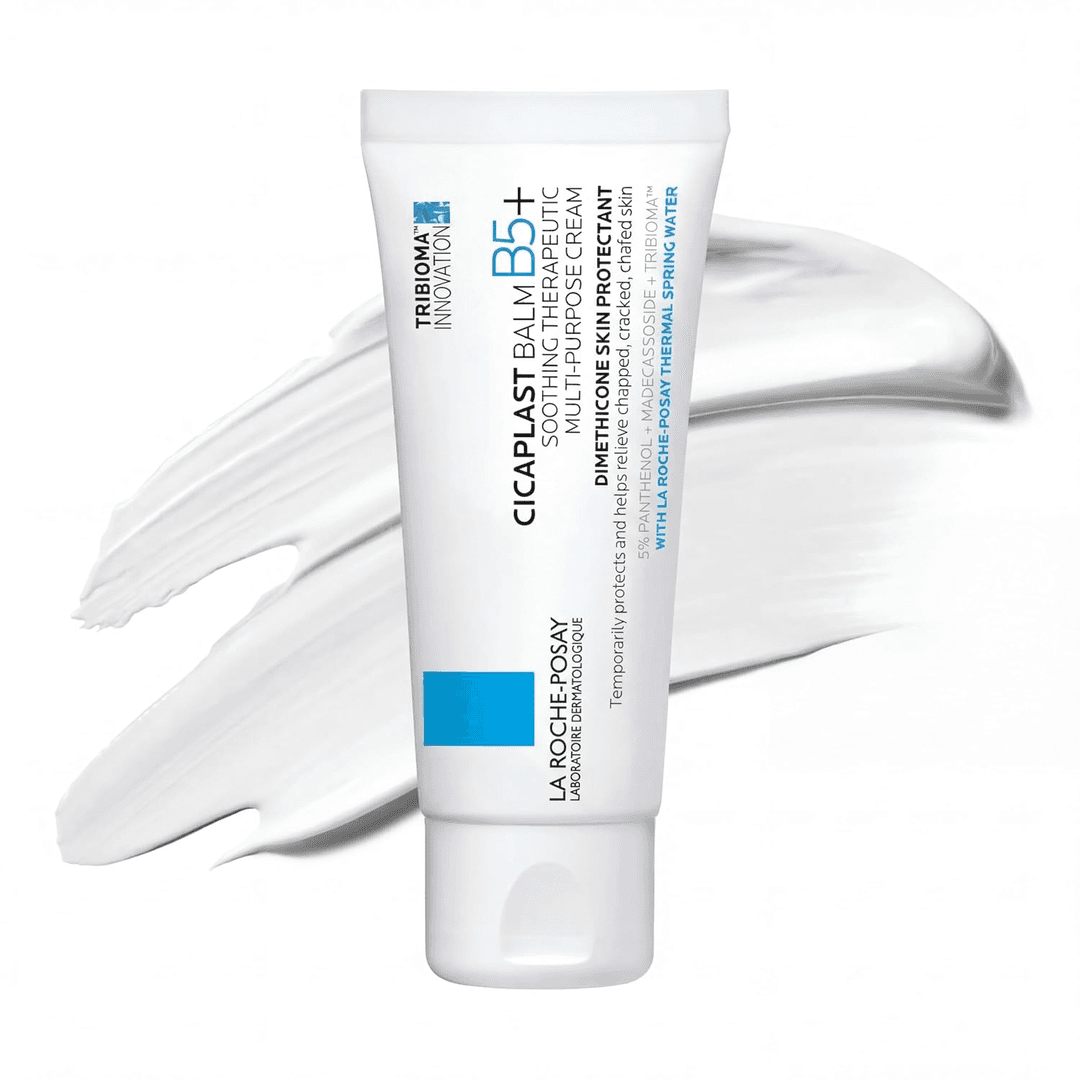
Here's what this looks like in real products: Some of the most trusted barrier creams work precisely because of occlusive ingredients — not despite them. La Roche-Posay Cicaplast Balm B5 pairs occlusives with panthenol and madecassoside for irritated skin. CeraVe Moisturizing Cream combines occlusives with three ceramides to restore the skin's lipid structure — and it won our full CeraVe vs Cetaphil vs Neutrogena comparison. Even cult K-beauty hydration layers like the COSRX Snail Mucin 96% Peptide Booster Set rely on a film-forming finish to lock hydration in overnight. None of these "suffocate" your skin — they reduce water loss, which is exactly what an impaired barrier struggles to